
ManMachine
@max@manmachine.me
Professional computer toucher.
Amateur photographer and musician.
Autistic.
Amateur photographer and musician.
Autistic.
ManMachine
@max@manmachine.me
Does #SNES music count as a #chiptune?
That machine arrived in the late chiptune era, when FM synthesis was the norm, and it seems to have some PSG-like functions (fire and explosion sounds in SNES games often sound like the NES), but for the most part it is a sample-based synthesizer.
Wikipedia says Fast Tracker makes chiptunes <https://en.wikipedia.org/wiki/Chiptune#Contemporary_chiptune_music>, but unless I'm mistaken, FT uses the CPU for software synthesis, not a PSG or similar, so… 🤷♂️
@argv_minus_one it has a chip that does beep boop, right?
It has a chip that *can* do beep boop, but that's a pretty drastic understatement of what that chip can do.
@argv_minus_one I think the important thing here is that there's a chip. E.g. GBA has a chip from DMG/GB that can be used for chiptune, but a lot of stuff was done in trackers running on CPU and is arguably not a chiptune
Does the SNES sound chip count, then? Because it isn't just a synthesizer chip. It runs arbitrary code, so it's conceptually somewhere in the middle between a straight synthesizer chip and a CPU-side tracker program.
@argv_minus_one I'd personally count it in. Quite a few chips out there can play PCM, so it's a philosophical question of "how crappy the PCM has to be to consider it an instrument rather than an audio channel"
arg. one of the international TLDs is 닷컴, which is Korean, pronounced "daskeom", a loanword from the english "dot com".
so it means dot com. but it's a TLD.
So it always comes after a dot!
so it become example dot dot com!
@foone I always wanted to register dash-dash.dot.com, so I could have help.dot.dash-dash.dot.com.
@foone ‘Pronounced “daskeom”’ might give the impression that Korean speakers are being incredibly obtuse with their loan words. 닷컴 is pronounced much more like “daht-comm”.
@foone
I used to joke about hosting something on a domain named "double you double you double you dot dot dot com" on a dot com TLD.
Oh, I forgot to mention that apparently I had a lunch at the same venue at the same time as Keir Starmer? Everyone around got a bit agitated but I kind of missed it, was too busy thinking about reliability engineering
The food was alright I guess, just some falafel wraps
@nina_kali_nina shoulda been thinking about falafel wraps. Trust me, i do it a lot.
@drj I don't like falafel 🥺 I'm always suspicious of it. I like chickpea but not falafel. So I didn't want to think about it
@nina_kali_nina oh. now i realise my toot needed a CW. But so did yours! 😭
@drj 'food'? 'ukpol'?
@nina_kali_nina "upsetting opinions of ones friends". haha
@drj 😓 sorry. Actually I'm now reminded that I don't have a food that I like consistently
@nina_kali_nina it's tricky. you build a personality around liking falafel, and then you try a new falafel place, and it's a bit meh, so now you're all like maybe i don't like falafel, maybe i only like Good Falafel, which is just like a normal way to like things.
![[?]](https://media.mstdn.social/accounts/avatars/115/708/188/881/910/739/original/6bc20ee110fd5036.png) eclexic [he / they / any (...except "it")] » 🌐
eclexic [he / they / any (...except "it")] » 🌐
@theeclecticdyslexic@mstdn.social
@thomasfuchs broken implies that there is some kind of theoretically possible working state. Have you heard of the concept "not even wrong"?
https://en.wikipedia.org/wiki/Not_even_wrong
I would say that agentic harnesses fall into the category of "not even broken".
Secret Panel HERE 🌕 https://tinyview.com/mrlovenstein/2026/07/20/moon-shot

How old are you?
| I've used a rotary payphone: | 1374 |
| I've used a touch-tone payphone: | 604 |
| I've used a payphone with a card swiper: | 94 |
| What the hell is a payphone?: | 59 |
“We are hopeful that with further refinements, the algorithm might become practical for numbers with merely billions or trillions of digits.” — statements dreamed up by the utterly deranged https://en.wikipedia.org/wiki/Galactic_algorithm
Lenovo ThinkPad X60 Tablet (2006)
(photo source: ebay)

Please help me understanding one thing
(Feel free to boost, it will be great if a good amount of people answer to this question)
Is ponctuality a big deal for you ?
| Yes and I'm european: | 787 |
| Yes and I'm NOT european: | 268 |
| No and I'm european: | 150 |
| No and I'm NOT european: | 61 |
"actually its fine if agentic code is unmaintainable for humans because the agents will just maintain it" is just the next cope in a long series of copes from LLM true believers who said they were going to revolutionize customer support, summaries, art, writing and video, all of which they failed at
genAI is a dead-end technology that creates output without intention that is practically useless. the only reason it hasn't failed yet is because of the trillions pumped into it by business idiots
the argument is that nobody cares about the code that makes software work, only the results. if you pile slop on top of slop for long enough, i can guarantee that your software will reek of slop and your customers will be able to smell it, and reject it just like they did with the other failed use cases
to be perfectly honest when someone claims code has no "feel" i know i can safely ignore anything else they say
@eniko my reaction to the mere idea

Alt...
Image montage of two paintings of Samuel Johnson. The first one on the left depicts Samuel reading a newspaper. The other one depicts Samuel looking at the viewer with a perplexed look.
@eniko the worst thing is I know previously good developers who now believe this. “I never cared about the assembler output from my compiler, and now I don’t have to care about the code either, I only have to validate the results”. Complete madness
@sinbad @eniko I sad through a lunch & learn session my coworker gave a couple weeks ago. It was an advertisement for using LLM workflow at our business. We are already mandated to use this workflow by management so we can double our output without firing anyone (which as an aside is a veiled threat).
Anyway the gist was that one does not prompt an LLM model, but rather prompts some interface to it (Claude CoPilot etc). And that this is not different than the evolution of writing programs in binary native code on punch cards, or in assembly language, or in C, or in blah blah blah. Now we are going to evolve further to articulating the program in English to something that can translate that into a binary program. And we can be more creative in natural languages.
There was a mumble about subjectiveness and ambiguity in natural language, but I think they totally missed the point that they themselves almost made, that is that a correct program requires a set of instructions that can't be misinterpreted, and that the instructions today are the same as the instructions tomorrow (though the state of things in the universe may have changed).
In a way, they acknowledged that we are prompting models in a sloppy way, but to truly get good at it, we are going to need special languages to express prompts in, and excellent wrappers to excellent models that can always produce the same output when given the same prompt.
Which is a good programming language and compiler. Out of exhaustion and exasperation, I did not point out that we already have good languages and good compilers.
@gregdavis @eniko my perception is that there are lot of programmers who are tired of programming and are jumping at the chance of making software without that inconvenience any more. They probably should have become business analysts or product managers a while ago
Every time the PT Barnum's keep saying they'll use LLM-gen-AI to monitor LLM-gen-AI to monitor LLM-gen-AI…, I hear that children's song, “There Was an Old Lady Who Swallowed a Fly”.
I've thought too a lot about the analogy between compilers & LLM-gen-AI. I wonder sometimes if the disconnect is that the younger generation of software experts grew up with compilers that have so few bugs in them?
@bkuhn @eniko @sinbad I would believe that. Early in my career one of my colleagues found a genuine compiler bug, and it’s the only instance I ever heard about. I have never needed to write assembly professionally, but have on occasion had to inspect assembly or even disassembled output for debugging purposes.
Realistically, you can make a career without having to know what machine code is going into the machine, but the idea that *nobody* can really know or understand what’s going in—that sounds unnecessarily dangerous.
Oh, of course, but they're more subtle.
At my 3ʳᵈ for-profit tech job (1996), the linker core-dumped 25% of the time. Of course, it was a proprietary software toolchain so I couldn't fix it, so instead I wrote a randomization trial in the Makefile to randomly reorder .o files on the command line until it didn't core-dump.
Such bugs are a thing of the past.
My manager was impressed at how quickly I “fixed the bug”. I pitched switching to GCC & he refused. Rest is history.
Cc: @sinbad
@eniko @mmcknett @bkuhn @sinbad @JoshJers back when I joined this field, downloading GCC just to see if a presumed bug wasn't already fixed took a couple of hours. I've found a bug in GCC at least three times without winding up being credited for the fix because by the time I identified the issue, checked it was still relevant, and wrote up a fix, it was fixed upstream.
Blvd magazine described me as a "bottom feeder" at the time. Still unsure if that's derogatory or a badge of honor.
@eniko absolutely fucking spot on as always. But then, I'm a man who enjoys a refactor. I actually tried using LLMs to shortcut some refactors I could see in my head a couple of times. They, predictably, completely fuck it up if it's got more than about one step, but can manage anything you could do more reliably with a regex. Not sure where I'm going here. Maybe code is a bit like poetry. It should be terse and non-repetitive but have deep patterns idfk.
@eniko I feel like this had already been happening long before generative AI. You can absolutely tell at a glance when a piece of software is built upon layers of legacy code just from using it versus software that actually had care put into it.
@natalie exactly. there's this pervasive myth that the quality of underlying code is completely hidden from users because they cannot see the actual literal code which is just such a baffling misconception of how things actually work
@eniko @natalie At least with real legacy code people keep working at it because of the commercial sunk cost driving them on - the tendency to turn generated projects into new-abandonware is a thing. Like yeah sure you're gonna actually go through the six plus months of manual effort it takes to onboard someone into a legacy code base they don't know when you could just give up.
@eniko I've only written so much code and created a few rudimentary games before stopping primarily because I didn't feel like I fully understood the code I wrote and didn't feel like I could release any of it into the wild because of that lack of understanding on my part. It felt irresponsible to do so.
I'm guessing many others don't feel the same.
@eniko They can't even produce working code because without understanding what anything means, they can't understand whether what they just wrote worked or not. Theorem proving GOFAI like z.B. Coq, Iris, CBMC, Dartagnan usw. and parallel Lean-based ecosystems are the way, not LLM GenAI, which has major introspection issues with avoiding plagiarism, licence violation and other problems beyond just writing broken code and being incapable of understanding the fact it doesn't work beyond just why it's not working.
@eniko It's simultaneously banking on AI to be actually intelligent and also saying that actual intelligence doesn't matter. Which is... funny. It also considers co-operation between agents fundamentally different for co-operation between all existing (biological) intelligent agents. I'd like them to back up the bold claims
What's going to happen to LLMs is what happened to VR. The only VR companies left are a dozen VR games, showcasing houses before they're built, and that one VR escape room in every major city.
Those are workable businesses plans but nothing nearly as scalable as what was lied to investors.
LLMs are going to end up exactly like that.
The only adjacent technology that will probably scale are the physical robots coming out, because they can be taught on the processing power of a laptop.
@eniko So true. It's the case for the company I'm working for. This plus leadership / management bs, I sometimes wonder how they are still in business.
@eniko Yet some of us are able to build tons of fun things. Ive completed so much in the last year or so of doing LLM assisted programming. Both in my homelab and at work. I'm sorry that you think its not tenable, but there are a few of us making it work!
I am eagerly, eagerly awaiting the point where they start feeding agentic code into the actual LLMs, and don't keep what's required to roll them back. Why would they? Obviously agentic code is far superior to human code, why would anyone need to have rollbacks?
But other than that, of course you can feel when code is shit. It comes out in the UI, it comes out in the design, it comes out in every typo and glitch you see. The only time you can't feel it is if the entirety of everything is shit, and there are plenty of coders out there who simply won't let that happen.
@eniko Revolutions like this just happens. If there’s endless talk and pushing it for years it just fizzles out.
Freaking cat videos on the internet changed everything for example.
@eniko the compiler comparison is right, but I don't think bug rate is the real gap, determinism is. a compiler bug is the same bug every run, so once it's found it's fixed for everyone forever. an LLM can make a similar mistake a different way each time, so review never gets to retire the way debugged compiler code does.
The Moneyed have always worshipped at the altar of Magical Thinking of outputs without inputs.
Wealth without effort on their part.
Perpetual motion machines built on someone else's unpaid blood, sweat, & tears.
Profits are private but losses are public.
Pollution without cleanups or reparation.
@eniko I also enjoy that when businesses "unlock" the full capabilities of AI tools they chew up so many "tokens" that they become wildly and unsustainably expensive.
Feels like it's going to solve itself as an issue. No coincidence that all the major AI companies have suddenly dashed to get their IPOs so the stakeholders can cashout before the burst.
@eniko I would buy the argument that AI is a 5th Generation Language if the inputs were kept, were kept in an interoperable form and the output was deterministic.
At least then systemic bugs could be addressed systemically.
Of course none of this is true as I understand it.
@eniko as they say in finance, the market can remain irrational longer than you can remain solvent.
Sadly, lack of any long term sustainable business model does not imply inability to attract VC etc
@eniko @janeishly I think the key is "without intention". These tools do not, in any way, handle _meaning_. Coders tell me, "It writes great comments." Really? It knows what you intend the code to do? Or does is simply explain what the code _actually_ does? If the latter, it's redundant because I can just read the code. This is a First-Year CS mistake.
AI has no idea that "Colourless green ideas sleep furiously." is not correct. It does syntax, not semantics.
@eniko
It's not a bug, it's a feature.
Those people couldn't read the code before and they can't read it now but stuff seems to work so progress!!!
I'm myself forced to slop at work and oh boy, does it make you lose all faith in the management.
@eniko The compiler analogy breaks in one place for me. A compiler is deterministic, same input gives the same output, so a bug in it gets caught fast because it repeats. An LLM can write correct code nine times and produce something subtly wrong the tenth time for no reproducible reason. That's not a bug you file, it's why every diff still needs a human read before it merges.
Old MacDonald had a Theremin

Alt...
Two panel comic. Text reads old Macdonald had a theremin. Second panel is him playing the theremin with the text eeeioiieeeiiiooooo behind him

Alt...
seed: 2026-07-17T05:45:08.180225
size: 256 x 256
shape: GS_DIAGONAL dir=(0.2276, 0.7724)
color pick method: COL_AUTHORED_PALETTE (pico8)
blends:
(0, 0, 0) -> (255, 241, 232), 0.2442 (ramp 0)
(255, 241, 232) -> (83, 76, 69), 0.4770 (ramp 0)
(255, 119, 168) -> (29, 43, 83), 0.2787 (ramp 4)
dither: DT_FULL_COLOR
Being tired, bored and lonely. Cons: can't do much. Pros: finally decided to watch some anime without English subs, wow, turns out I probably don't need any subs at all anymore
@max oh, me two! Though I don't remember the exact year, must've been 2011 or 2012
@nina_kali_nina looking forward to getting to that point…in a few years probably :')
@follpvosten good luck! If there's a show you love and watched a few times in English, it's not a bad idea to watch it in Japanese
@nina_kali_nina It's definitely content dependent for me still, but I am actually so proud of getting through "An Observation Log of my Fiance who Proclaims Herself a Villainess" without really thinking about it too much (outside a couple of lines)
@nina_kali_nina Nihongo jouzu, listening comprehension edition!
I'm still far from that level, going slow but steady. One of my (very) long term goals is to be able to read the entire Umineko VN in the original Japanese. I always remember an interview snippet where Ryukishi07 mentioned being surprised over western readers enjoying Umineko in translated forms, since he considered its text difficult to grasp even for a Japanese reader.
@jra ganbatte! I'm slowly reading through Higurashi with a friend, it's been multiple months and many hours, and we're just starting the 6th arc. I think it is shorter and easier than Umineko, so I can imagine the surprise
@nina_kali_nina Thanks! Good luck with the remaining arcs, the 6th's story might just be my favorite. I'll get to Higurashi eventually as well 😅
@nina_kali_nina a friend of mine recently suggested me "my ridiculous reincarnation" and I have to admit I'm having more fun than I expected
@nekoplanet sounds like a fun show indeed
@nina_kali_nina I'm fairly tired of the isekai/reincarnation trope, even the subversions and parodies(I mean, how old is konosuba... 10, 15 years?). But I like that they decided on a different art style for each reincarnation, and clearly they are not taking the topic very seriously.
Rise and grind

Alt...
4 panel momo comic: Panel 1: momo in bed. We see the sun has risen through the bedroom window. Text reads “I wake up” Panel 2: momo behind his table. There’s a coffee pot and a pink cup of coffee on it. Text reads “pour myself a little coffee” Panel 3: he’s in a chair behind the table with an opened laptop and a glass of water. It says “check my little emails” Panel 4: we see he left his house. Door still a little bit open. Text: “ignore them a little bit” as momo gleefully goes to play outside rather than answering his work duties
@heyheymomo I have the same coffee maker :D but mine is red
@gkrnours I love those things!
@heyheymomo it's like a morning ritual :)
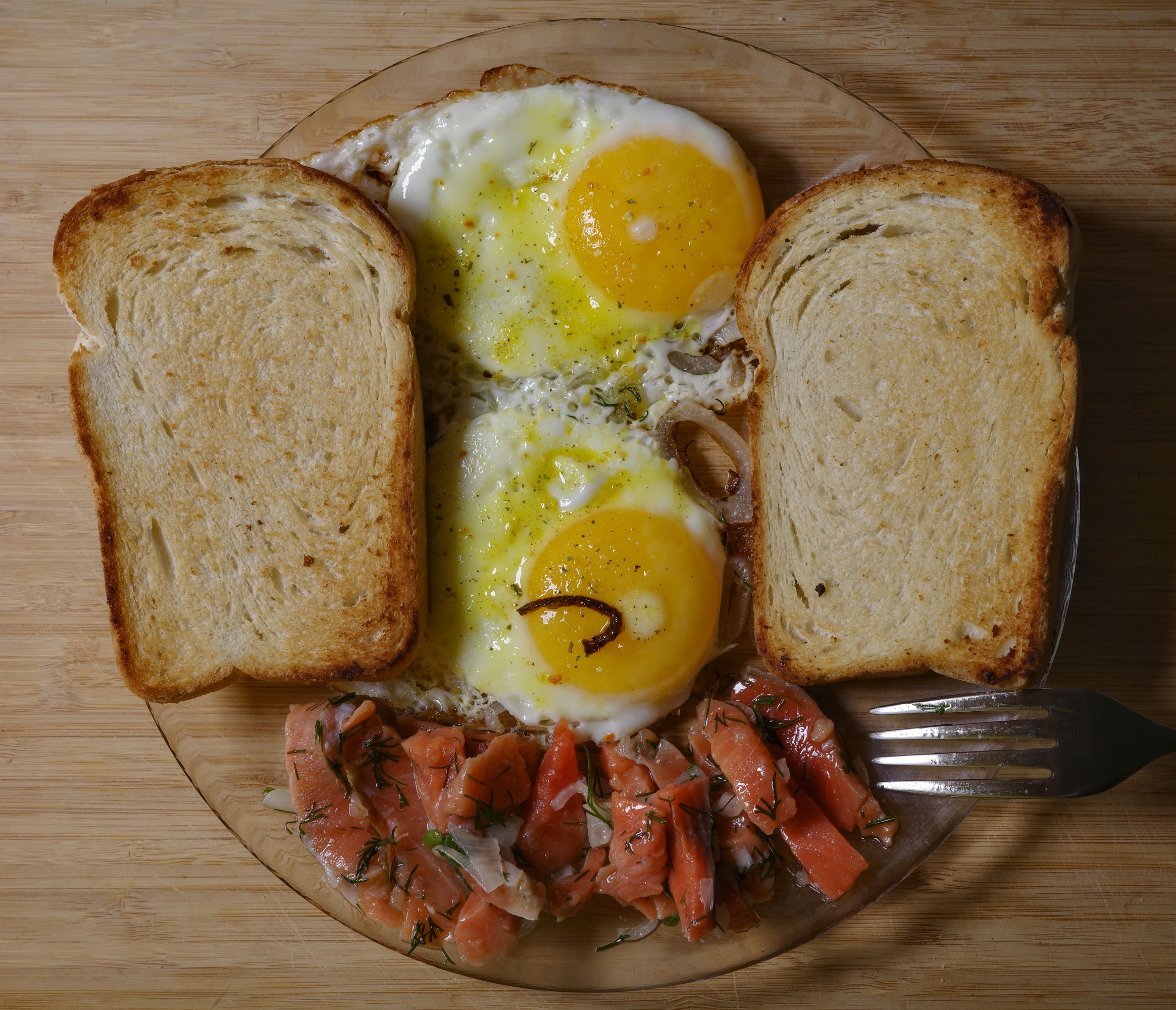
Instruction I found for it say to start with hot water, so I begin by starting the electric kettle, turning hot the electric plate and grinding the coffee. Water came to a boil more or less when I've enough ground coffee. I pour hot water, coffee, close it, put it in the hot plate. I make some foamy milk in a mug, coffee and foam are ready at same time. Turn off the plate, add a grid with aluminium and a slice of bread on top. It toast while cooling down
"In a burning world we need to hold ourselves and each other to a higher standard. “Useful” is far, far from being good enough."
@tante That's why nearly all my criticism of genAI for quite some time now has not been about the usefulness or superficial appearance of quality. Because to me, usefulness/quality is somewhat irrelevant in this debate.
Asbestos is also extremely useful. That's why it got used! Harmful products get used all the time, and harmful business practices keep happening. Because of course they're useful!
Utility is the wrong question to be asking.
Although trained in physics, I worked in the computing industry with pride and purpose for over 40 years. And now I can do nothing but sit back and watch it destroy itself for no valid reason beyond hubris (if I'm being charitable).
Ineffable sadness watching something I once loved deliberately lose its soul.
@robpike personally, I wish I could program for fun, because I really enjoy it.
Unfortunately, I can't retire yet, so I have to use my skills to live, and that means working in this awful soulless market. I have considered changing career because the money is not that good anymore if you're not an AI maximalist, and I don't know if I have the will to go this way for survivability's sake.
My internal fight between my ethics and the job is really crushing. It is extremely sad.
I just wish an extremely fast readaptation because economy wise, it doesn't make sense. So if the people financing this hype could see how much they're gonna lose fast, that would be grand, it would maybe avoid a massive recession or a global ecological collapse.
Anyway, outside of this hellscape, I still have a project I have in mind for 23 years, and I will write it in Go with my bare hands because it is the language I really love and feel creative and productive with. So thank you for all your work on it!
for the love of fuck can just one piece of core computing infrastructure not be AI slop maintained by some weird fucker casually justifying his decision with right-wing talking points like that’s just a normal thing to do
bitter lol @ “just fork it if you’re not happy” for the motherfucking linux kernel of all things https://mastodon.social/@gamingonlinux/116924101230198934
Achievement unlocked: Brew coffee in a drip brewer by putting it into the water tank instead of the filter. Have fun cleaning up!
![[?]](https://mastodon.sdf.org/system/accounts/avatars/113/059/004/569/382/369/original/1b5ae86850d2461a.png)
![[?]](https://media.tech.lgbt/accounts/avatars/109/093/165/028/047/640/original/7463f84b80dc117a.jpg)
![[?]](https://manmachine.me/social/max/s/avatar-6ae1448a9abc4478bc7db96b78ff84a9.png)
![[?]](https://digipres-club.s3.bhs.io.cloud.ovh.net/accounts/avatars/109/388/102/040/291/211/original/a2c1df6cc1ded7e4.png)
![[?]](https://cdn.myside-yourside.net/mastodon/accounts/avatars/110/624/029/428/841/946/original/52f604431ea6ae07.jpg)
![[?]](https://ostatus.lardbucket.org/system/accounts/avatars/000/000/001/original/028a8d94eca58f29.png)
![[?]](https://media.mstdn.social/accounts/avatars/109/349/941/912/741/020/original/8dc30e25f99a6669.jpg)
![[?]](https://f2.tchncs.de/accounts/avatars/110/668/020/825/309/267/original/ed8ea3a043a2b510.png)
![[?]](https://cdn.cupoftea.social/accounts/avatars/115/030/490/331/528/170/original/e9e16b66407e37a4.jpeg)
![[?]](https://cdn.fosstodon.org/accounts/avatars/109/325/606/609/299/731/original/7e057ac36ce649ec.png)
![[?]](https://o.mastodon.nz/accounts/avatars/109/243/416/358/775/030/original/232f922a81566632.jpg)
![[?]](https://files.mastodon.social/accounts/avatars/109/977/772/313/608/909/original/91129379df628e70.png)
![[?]](https://typo.social/system/accounts/avatars/109/313/698/978/921/520/original/c46f1882e5d23705.png)
![[?]](https://cdn.masto.host/mastodongamedevplace/accounts/avatars/114/216/316/440/009/843/original/59d02dfd567ae210.png)
![[?]](https://cdn.masto.host/mastofreedissociationcom/accounts/avatars/115/578/334/005/274/103/original/be2d1565558d7d26.jpeg)
![[?]](https://s3.metapixl.com/metapixl-media/cache/avatars/576074484176333270/avatar_ucyny7.png)

![[?]](https://files.mastodon.social/accounts/avatars/000/236/983/original/0d15163171048b4b.png)
![[?]](https://media.mathstodon.xyz/accounts/avatars/113/542/844/287/554/806/original/6fe49a3ff85d1e84.jpg)
![[?]](https://files.mastodon.social/accounts/avatars/116/958/210/282/078/425/original/9552479b89f3c6f1.png)
![[?]](https://files.mastodon.social/accounts/avatars/000/449/710/original/8ed6e2fe8ddf696b.jpg)
![[?]](https://files.mastodon.social/accounts/avatars/000/271/440/original/210e3c734fa7abed.jpeg)
![[?]](https://files.mastodon.social/accounts/avatars/000/489/516/original/a6cf3bda7817ca4e.png)
![[?]](https://assets.merveilles.town/accounts/avatars/110/618/037/889/897/311/original/7685c244dff08111.png)
![[?]](https://social.troll.academy/system/accounts/avatars/109/366/741/879/615/441/original/5b895efee364c467.jpg)
![[?]](https://static.piaille.fr/accounts/avatars/109/312/813/782/638/149/original/e003ff9709ed9fe4.png)
![[?]](https://cdn.masto.host/mastodongamedevplace/accounts/avatars/114/482/863/960/229/387/original/5dd3cda413077254.png)
![[?]](https://cdn.masto.host/mastodongamedevplace/accounts/avatars/109/301/755/951/091/242/original/fdae111835185d66.gif)
![[?]](https://cdn.masto.host/mastodongamedevplace/accounts/avatars/000/000/359/original/6a60c3203ff02293.png)
![[?]](https://media.hachyderm.io/accounts/avatars/109/275/313/887/735/961/original/8bb5b5a122497319.jpg)
![[?]](https://cdn.masto.host/fedicopyleftorg/accounts/avatars/114/797/464/859/441/527/original/e12cae8da5f59886.png)
![[?]](https://media.hachyderm.io/accounts/avatars/109/328/561/666/442/197/original/a509b03ffe47f638.jpeg)
![[?]](https://cdn.masto.host/mastodongamedevplace/accounts/avatars/109/244/809/829/774/463/original/5ebbfef98bb038f8.jpg)
![[?]](https://media.infosec.exchange/infosec.exchange/accounts/avatars/109/546/780/705/745/960/original/e24a5c113dd482b2.jpg)
![[?]](https://cdn.masto.host/mastodongamedevplace/accounts/avatars/000/012/792/original/7db9f7471b373748.png)
![[?]](https://hostux.social/system/accounts/avatars/109/364/022/494/683/474/original/cef09b601e21de55.png)
![[?]](https://idoltime.prismst.one/media/e69e17f39a92590d52e8c352d12356e7578168c3207c02171954ed5b76de744e.png)
![[?]](https://cdn.masto.host/mastodongamedevplace/accounts/avatars/109/297/487/496/658/892/original/23105c8fd876e5d5.png)
![[?]](https://cdn.masto.host/dicecamp/accounts/avatars/109/649/940/913/274/801/original/2ad6f7560bd3b484.png)
![[?]](https://files.mastodon.social/accounts/avatars/107/300/603/468/739/351/original/37c9f77352df6378.jpg)
![[?]](https://files.techhub.social/accounts/avatars/109/328/179/654/620/076/original/486bac5b5bf7c052.jpeg)
![[?]](https://cdn.discuss.systems/accounts/avatars/109/368/581/130/572/345/original/f726c2b1b06f733d.png)
![[?]](https://cdn.fosstodon.org/accounts/avatars/109/292/195/291/558/301/original/e36886806eccb427.png)
![[?]](https://files.mastodon.social/accounts/avatars/108/196/217/576/608/826/original/bc5881b973a4d34b.jpg)
![[?]](data:image/png;base64, iVBORw0KGgoAAAANSUhEUgAAAEAAAABAAQAAAACCEkxzAAAAUUlEQVQoz43R0QkAMQwCUDdw/y3dwEvsvzlL4X1IoQkAisKmwfAFT3RgJHbQezpSRoXEqeqCL9BJBf7h3QbOCCxV5EVWMEMwG7K1/WODtlvxAYTtEsDU9F34AAAAAElFTkSuQmCC)
![[?]](https://media.infosec.exchange/infosec.exchange/accounts/avatars/000/079/645/original/9c3da36e56d9aced.jpg)

![[?]](https://chaosfemtw.files.fedi.monster/accounts/avatars/109/865/903/453/489/841/original/794941abd4b9a4db.png)
![[?]](https://media.sakurajima.moe/accounts/avatars/111/180/090/776/504/104/original/8ccc7739d5b0d716.png)
![[?]](https://cdn.masto.host/mastodonie/accounts/avatars/115/221/419/544/794/407/original/379eeece71440d86.jpg)
![[?]](https://files.mastodon.social/accounts/avatars/116/839/267/820/083/047/original/f86b6ee5052e2424.png)
![[?]](https://s3.eu-central-2.wasabisys.com/mastodonworld/accounts/avatars/109/385/656/481/994/598/original/ae44acc6f8756e62.png)
![[?]](https://media.mstdn.social/accounts/avatars/109/323/285/162/078/985/original/f018b8de3e06e66f.jpeg)
![[?]](https://media.mstdn.social/accounts/avatars/111/596/708/892/601/702/original/cb5a0c4fa4ceac5e.png)
![[?]](https://files.mastodon.green/accounts/avatars/109/290/427/055/273/383/original/285a7cc4ff45a8fc.jpg)
![[?]](https://mastodon.nzoss.nz/system/accounts/avatars/109/375/363/305/587/822/original/92f7c925f85da812.jpg)
![[?]](https://media.infosec.exchange/infosec.exchange/accounts/avatars/109/327/540/940/053/921/original/7e894651f5312787.png)
![[?]](https://files.ioc.exchange/iocexchange/accounts/avatars/109/320/697/263/826/535/original/452045644aa6671b.jpg)
![[?]](https://files.mastodon.social/accounts/avatars/113/407/595/786/529/201/original/1bd3c5e529b97162.jpg)
![[?]](https://media.infosec.exchange/infosec.exchange/accounts/avatars/109/389/360/111/558/734/original/b183a374d4a4862c.png)
![[?]](https://cdn.masto.host/crispsandwich/accounts/avatars/111/172/776/589/203/107/original/8f3643e63e16f0c9.png)
![[?]](https://files.mastodon.social/accounts/avatars/109/904/525/793/915/697/original/7ead20b49f808285.png)
![[?]](https://files.mastodon.social/accounts/avatars/113/427/787/479/585/470/original/8ad4453c1a8076be.png)
![[?]](https://karp.lol/fileserver/01JKXF1D15EEBHSHJ3RKMA7XAR/attachment/original/01KY1M4GCBNWC95HPTK0D4CFRQ.jpeg)
![[?]](https://media.tilde.zone/accounts/avatars/108/947/815/952/585/857/original/eceee90d8bc4c6ba.png)

![[?]](https://files.mastodon.social/accounts/avatars/000/026/555/original/W3Z8YR99183G.png)
![[?]](https://soc.jra.sh/media/7027d9a2-d7b8-49f6-91ab-0f31ebbc981c/blob)
![[?]](https://files.mastodon.social/accounts/avatars/108/194/733/621/431/166/original/7d2e0f28ffe8f152.jpg)
![[?]](https://cdn.masto.host/socelnet/accounts/avatars/109/321/726/474/403/491/original/bc91bba540027cd9.png)
![[?]](https://media.mstdn.social/accounts/avatars/000/293/265/original/e1f9455b9463c337.jpg)
![[?]](https://xoxo-media.sfo2.cdn.digitaloceanspaces.com/accounts/avatars/113/018/899/366/662/699/original/e5ecadaeb84c6fb3.jpg)
![[?]](https://media.mstdn.social/accounts/avatars/109/285/176/365/800/864/original/67bf55bacc2f0ae5.jpg)

![[?]](https://bunt.social/system/accounts/avatars/112/153/585/065/082/689/original/70943ecd5105cfd2.png)
![[?]](https://cdn.masto.host/mastodongamedevplace/accounts/avatars/109/307/320/668/816/022/original/a885c239a1cd5555.png)
![[?]](https://tldr.nettime.org/system_nettime/accounts/avatars/109/459/979/294/992/727/original/8b21002d657f47d8.png)
![[?]](https://cdn.masto.host/indiewebsocial/accounts/avatars/108/195/559/450/330/916/original/6a6e84b524388a77.jpeg)
![[?]](https://files.mastodon.online/accounts/avatars/109/300/712/501/360/170/original/c22acf4232729f44.jpeg)
![[?]](https://media.hachyderm.io/accounts/avatars/109/617/820/723/553/356/original/54d2be5e385f9616.jpg)
![[?]](https://media.hachyderm.io/accounts/avatars/109/557/443/470/875/717/original/d43307493a117048.jpeg)
![[?]](https://cdn.masto.host/mastodongamedevplace/accounts/avatars/000/004/029/original/7563c69400d14082.png)
![[?]](https://media.mas.to/accounts/avatars/109/287/758/133/964/366/original/0f3099c0adfb36a0.png)
![[?]](https://fux.am/fileserver/019XSVJ765T07Y8QE0TWSFVGG0/attachment/original/01JSHZFMJW24RMMBZB54BNGFNG.png)
![[?]](https://cdn.transfem.social/files/40fcd683-4188-4efd-bc57-d418d6e8bffb.png)
 [
[